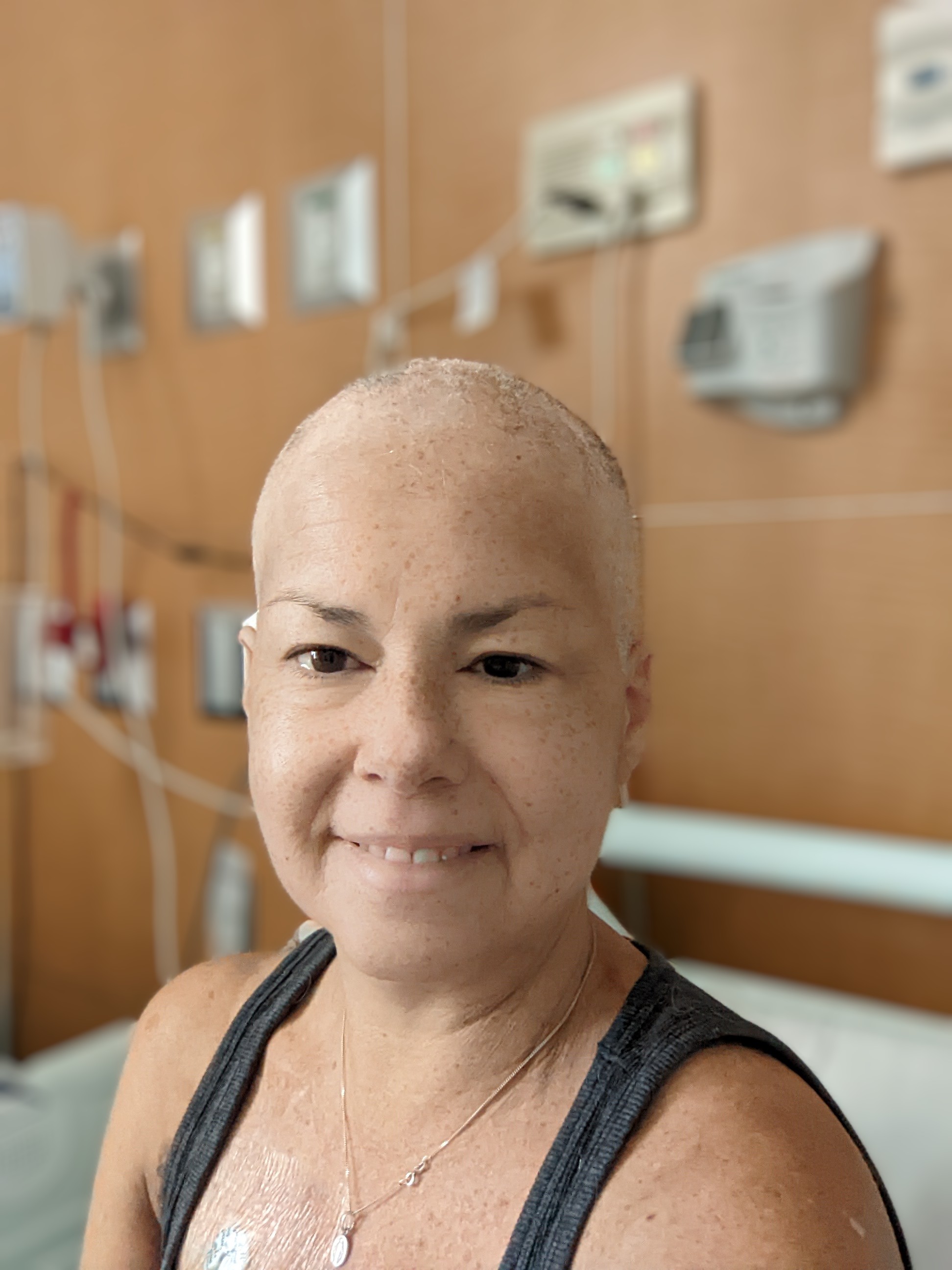
Wednesday, June 22, 2011

Life's contradictions and the ever elusive concept of happiness

Life is full of contradictions - some comical, some ironic, some just cruel. Walking on this path that none of us understands is a challenge from one moment to the next. There's highs, there's lows, and there's the balance of it all. These days, we try to find balance like an acrobat walking on a tight rope.

We spent the last few days in Cabo San Lucas, basking in the warm Mexican sun, wading in the pool with piña coladas in hand. Forcibly unplugged, we shrugged our shoulders and found a way to let go and for stretches of time actually managed to do nothing, while waiting for my brother's big day - his wedding day to one of the most beautiful brides anybody's ever seen. There was laughter and stress, comedy in the family dynamics that put "fun" in dysfunctional, and a combination of peace and stress that beat most average days.

These were happy days in many ways, with an amazingly joyous occasion to cap it all off. I have seen my brother grow from being a pain in my ass to this sensitive, emotive, creative man who has the ability to amaze me with his talent. And I have seen the light come into his life when he found my now sister-in-law - it's been a great addition and the best thing to happen to him hands down. There were tears at this wedding - hers, his, and everyone else's.

And through it all I was reminded of life's contradictions, as I watched this other man continue to decline rapidly in the claws of the horror that is Lou Gehrig's disease - this man that I love as if we were related by blood, this man who brought such happiness to my mother for the last 17 years, this man who was always patient, considerate, caring and giving. This man who walked me down the aisle when my father couldn't.

I have watched him go from limping last September to being bed-ridden and almost completely unable to communicate today. I have seen him be eaten by this disease, trapped in a body he no longer can control, losing his ability to communicate and all dignity along with it. I have seen him look at us in frustration and unbearable sadness, because he knows he is dying, and there is not a damn thing anybody can do about it or for him. I have prayed for a miracle. Today, I pray for a quick ending. And it breaks my heart to know that these few days I have with him are probably the last I'll ever have, and I'm not ready to say good-bye, to let go, to resign myself to the ending that I know will come.

Happiness is never complete - it gives and it takes equally and sometimes swiftly. There are only perfect moments. It's in those moments that we can experience that feeling of exhilaration that makes it all worth it - the risks, the rewards, the struggle, and yes, even the heartbreak.

Sunday, February 20, 2011

About womanhood...

I'm on a tear... I know, big surprise... why, you ask? I have been wondering about women and friendships and this thing that we share, this womanhood, this "sisterhood". You know, the thing that makes us sit around the circle and talk about everything, share every thought, every feeling, be there to support each other, and so on. And I will start by saying that, by and large, that is exactly what we do. We stand by each other, we fight for each other, and we become down right dangerous when one of us is threatened.

On the other hand, and here's the reason for my latest rambling, we hide things from each other. It's as if there were this unwritten code of "un-ethics" that requires us to hide the "darker" sides of womanhood, the things that would show the world we are (1) not perfect, (2) not as strong as everyone else thinks we are, or as strong as we think we should be, (3) not invincible, (4) not completely put together. In short, we hide anything that might tell other women that we are not Wonder Woman - and note here that we hide it all from each other.

We can be vulnerable, we can even be needy, but on those things that both define and test our womanhood, we can be nothing short of perfect. Except we mostly are not perfect, not by a long shot.

Take, for example, motherhood. Those of us who elect to have children and can conceive them without issues somehow are supposedly better than those who can't. Take childbirth, where those who can go through it without drugs (the craziest fad if you ask me), are somehow better mothers than those of us who much rather join the line that says "epidural here!" Take those first few weeks, where God forbid we admit to anyone that our little bundle of joy is the root of anxiety, doubt and even remorse!

Now, let me address those points in opposite order.

I remember being pregnant with my first child. What a joy! What a dream come true! What a nightmare! I remember spending those first weeks so overwhelmed, a shower was my greatest accomplishment. I was on a hormonal roller coaster in which one minute I cried because I thought my life had been fine without a baby, the next moment I cried because I loved that baby so damn much, and the one after that I cried because I surely was a horrible mother - who could possibly feel that way about her new born?

Turned out about 95% of women feel that way. It also turns out the great majority of those women never fess up to it, thus leaving the likes of me in complete ignorance and darkness and feeding us the dream of a wonderful time to come, a natural high to enjoy, and the perfection of life itself once your baby arrived. Granted, I am high strung (yeah, no kidding...), so this adjustment hit me rather hard. Add to it a couple complications, and it truly was hell on wheels. I now have made it my mission in life to scare the living daylights out of expectant mothers. Beware out there! This crazy woman will tell it to you as it is! And if your experience is completely opposite to mine, more power to you.

Point number two. Labor. That one little word alone elicits more anxiety than anything else a woman faces during pregnancy and after. We all talk about the pain - whether we've gone through it or not. We all want to know. We do get told it hurts like nothing else. We also hear how we're supposed to forget about it... maybe when I'm senile. We enroll and attend Lamaze classes, mostly led by militant women who profess having a baby without drugs is some kind of badge of honor. We get brain washed into thinking maybe we can deal with it, maybe we should really consider skipping the needle and opting for focal points, breathing and a tennis ball. We start doubting ourselves and start wondering if electing the needle means we'll be less - will it hurt the baby, will it hamper our recovery, is it really necessary... blah, blah, blah.

Some heroic women (crazy women in my book) do elect to have their babies that way. Good for them. Just don't judge the non-heroic women, like this one. This non-heroic woman didn't elect the natural way the first time and got her drugs. This non-heroic woman also didn't elect the natural way the second time but the gods had other plans and she didn't get her drugs. It's not a badge of honor, people. It's the indelible memory of horrendous pain, because unlike the other super women out there, this non-heroic woman doesn't do pain and has yet to forget. Sure. I made it through and lived to tell the tale. The baby will win this one no matter what you do. I considered standing on my head and crossing my legs until the anesthesiologist made it to my room, but hell, baby crowned, and I had to push. This non-heroic woman was exhausted, sore, and to this day doesn't see the point in doing it any other way than what nature should have intended: give me my epidural, baby!!

Point number three. A friend of ours is having her first baby. Being a woman who knows her mind and doesn't really care what anybody else thinks, she also is a woman who speaks her mind. Gotta love that quality in a woman. She had a hard time getting pregnant. She ended up seeing an acupuncturist, who incidentally works wonders and works fast. While seeing this doctor, she saw the pictures of three other people she knew. People who had issues too. People who prefer not to talk about these issues. People who could have helped her find an answer, if they hadn't thought that, somehow, they were less perfect, less heroic, less prepared to be mothers because they needed help.

Am I starting to make my point?

I am on a tear because of point number three. And, being the type who also doesn't care what anyone else thinks and the type who speaks her mind, this non-heroic woman is now starting to go through the dreaded "change" and sharing that little dark secret with everyone who may want to listen. Because guess what. Forty isn't too young for it. Forty is probably too young to notice, especially if you're on the pill - hello! Hormones in there! And when did the dreaded "change" signify the end of womanhood? Is it the emphasis we all place on menarche as the point at which young girls become "women"? Really? You're a woman at 11 or 12?? Scary. But that's another story. So, if we become women with our first period, does that mean we stop being women with our last one? Seriously??

Get a grip! Deal with it - whatever "it" is - and stop being ashamed of dealing with it in public. Let's stop placing these little episodes in our lives in dark little compartments that shall never come to light, lest we become less women. It won't take away from the suffrage movement, women's rights, equality in the workplace.

We can be women and not be perfect. We can be mothers and not always be sweet, happy, fulfilled. We can have it all, and yes, we are allowed to admit that we have to compromise, that we sacrifice parts of our lives. We can be full time professionals and balance family and career. And yes, we can admit it's not perfect, we don't have it all figured out, and some days we put chicken fingers on a plate because we are dead on our feet. We can be stay-at-home moms and not have a career and admit that it's hard, that some days we'd kill for adult conversation, a long, hot bath, and time to spend with just ourselves.

We don't have to be perfect. We never will be. And we never will be less women than what we are, because being a woman is not about being perfect, but about handling all of our imperfections with grit, and courage, and sometimes balls.

So have the balls to tell each other about those little dark compartments - and be prepared to enjoy the sisterhood that comes from shared experiences and complete understanding.

Monday, January 17, 2011

Welcome to 40!

When life begins! Or so they say... and I am excited about this - really, I AM! Why else would I tell the world my age, when I can easily shave a few years off and pretend I'm still in my thirties? Nonetheless, this whole turning forty thing has gotten me thinking... they say it's just the beginning of your life - I'm thinking in some respects it's just the beginning...

For us women it should read, "Welcome to 40! You now are entitled to regular mammograms." The fine print would read, "In exchange for this new thrill, we are taking away your 20/20 eyesight. You no longer will be able to read the fine print without chic, stylish (optional) glasses (mandatory). Unintended advantages of presbyopia may include no longer being able to see the mammography technician up close, like when she's ready to squeeze your tatas into those dreaded plates, effectively turning said tatas into temporary pancakes."

And I suppose that's what got it all started... unlike the pain of childbirth, which I will clearly remember for the rest of my natural life, I had forgotten how bad mammograms are. Really, who came up with this concept? It turns out this torture mechanism was invented in 1966, and yes, you guessed it, by a man... Albert Saloman. Now I ask myself, had Dr. Saloman been after screening testicles, would he have come up with the same device? I think not.

Of all the things to worry about as you get older, getting part of yourself grabbed, squeezed and compressed should be at the top of the list. Forget wrinkles and Botox. Quit worrying about the loss of your youth. Stop obsessing about impending menopause... and beware of the mammogram. And on top of it all, remember to keep your tatas healthy!

Friday, December 10, 2010

Perú... land of contrasts...

Perú is a land of stark contrasts. There is wealth and poverty, culture and ignorance, safety and danger like in most countries. And perhaps these are easier to see here because there are less degrees of each, making the contrasts more marked, more apparent, and harder to ignore.


I can walk around beautiful South Orange County and see the contrasts if I bother to look for them – there is homelessness, there are children who go without, all hidden behind the shiny veneer of incomprehensible amounts of wealth, sandy beaches, whitened teeth and surgically-altered women.

In Lima the contrast smacks me straight in the face, challenges me to look the other way, and smirks when I can’t ignore it. I can’t pretend it’s not there as I land at Jorge Chávez International Airport and see the result of nineteen years of proliferation of communities built on dirt by people who migrate to the capital because they can’t find a way to subsist in their hometown (incidentally, in Lima they make a killing by bucking the system).

My daughter’s first comment on the land where I come from is, “mommy, Perú is brown!” I smile a sad smile thinking how right she is and how much she doesn’t know. I flash back to the days when my university classmates and I had to conduct surveys in communities just like the ones we see from our window seat, where homes had no floors, roofs and many walls were built with straw, and children died of respiratory infection lacking proper medical treatment. I don’t know what the reality of those communities is now, but I can’t imagine it’s much different.

We land, and the airport has undergone a transformation – nineteen years don’t go in vain, and nobody is waiting for me to come back in order to make improvements. As we drive away, I see more of what I remember that hasn’t really changed much. For better or for worse, communities around major airports don’t seem to fair very well in many places around the world.

One thing quickly becomes evident. Lima has expanded into once unoccupied land, and in land that was occupied it’s grown vertically. Houses have been replaced by apartment buildings in most residential communities (my own childhood home included). Streets have stayed the same. Do the math and what do you get? Congestion beyond what anyone can describe coupled with the most chaotic driving conditions I can think of.

Where three lanes merge into one, I find five lanes of cars trying to beat each other for that leading spot. Lanes and signs are completely disregarded, red light and traffic cops being the one and only exception. There are driving rules, hundreds of them, but one rule prevails: break all other rules. The law of the jungle is king here, where Darwinism can be applied to any street in the city at any time of day – only the fittest survive.

I have forgotten all the roads, only remembering snatches of avenues that we used to drive through when I lived here. Many of them come back quickly, despite the fact that none of them look like anything I remember. And here I find more contrasts. On any given stretch along the main avenues I find restaurants and shops in houses that used to be just that, houses. It all has an air of slow decay, except for spots where investment has led to modern structures, the emergence of international chains – Starbucks leading the charge – and a general feel of order and luxury that turn the whole into an oxymoron.

The pavement is as irregular as ever in some sectors. In others, it is broken at each intersection as several cities undergo modernization of their dated traffic lights with smart versions. There is now a bus line that runs along one of the central expressways. Construction is underway for a train that will connect the Southern part of Lima to downtown, with the hopes that it will ease congestion. Progress has its price, however, and Lima finds itself trapped in utter gridlock during rush hour, which will last from five to eight at night in a city that’s the size of a handkerchief. Everything is close. And it can take forever to get there.

Traffic also brings back something that I miss dearly, as it is a reflection of much of the Peruvian culture. I get past the initial shock, thanks largely to the horror I see reflected in my husband’s face (in all fairness to him, he’s sitting in the back with my mother at the wheel, watching how she and everybody else manage to advance through chaos, horns blaring, brakes squealing, seemingly unaware of the whole while in reality paying very close attention.) I find humor in the situation. I find comfort in what we call “criollismo”, which I can only explain by saying Peruvians take a lot of things in stride, with humor, and by and large like to find the cracks in the system whenever possible.

I also find comfort in the fact that, despite how horrendous traffic is, in the face of the worst driving I have ever seen, in complete opposition to the way we drive in the States, there is no road rage. Nobody gets mad, nobody displays aggressive behavior, and under the lawlessness of the road I find almost a code of ethics – it’s ok to cut off my neighbor, deny passage to the guy trying to get in my lane, get so close to the car in front of me I can almost hear the sound of our bumpers kissing, and I can lean on my horn when another car intrudes too far into my lane so close we can touch each other. It’s ok as long as none of us does it with malice.

We push as far as the car next to us will allow us to push if he had the lane first. We’ll share the lane if we have to. We’ll keep on moving at risk of staying stranded in no-man’s land if we stop. We won’t truly help each other, but we won’t drive attempting to harm anyone either. It’s interesting. And to be honest, it turned out to be quite fun. I’m sure that last part is only true because I don’t have to live with it for the long run. For the faint of heart, there’s always a taxi.

People feel safer now than when I left, and that’s probably true of me as well. The attacks perpetrated by Shining Path are a thing of the past. Muggings still exist, as do kidnappings (mostly of the “day” variety), so I keep an eye on my belongings and hold my children’s hands with a death grip. Vigilance is key, as Peruvian muggers prefer the smart robbery where they walk away with your wallet or your purse and you are none the wiser. Confrontation is not their style as general rule, so staying aware of our surroundings keeps us relatively safe. In fact, Jim and I avoid getting mugged in downtown Lima by keeping our eyes open, much to the disappointment of two men who’d judged us unaware tourists (and much to my relief, as I was concealing our Canon 5D Mark II under my scarf).

Safety comes at a price as well. My mother claims robberies are down, people don’t get assaulted, and Lima is safer than ever. At the same time, she has a super-duper alarm system, electric fence included, as does everyone else; the alarm codes are never shared with the maids, who might be in cahoots with somebody else; there are security guards all around the city; fences and security guards have sprung up in most residential communities, serving as deterrents to crime; and cars can be purchased with bulletproof steel and windows (yeah, there is demand for such thing). Safety is relative, and much of it could be considered an illusion. (Addendum: just found out one of my school friend’s husband had his car completely dismantled at a restaurant on the one night they didn’t have security… case in point!)

On the other hand, we can go anywhere without feeling like we’re being taken advantage of like we feel anytime we go to Mexico. Exchange rates for dollars are fairly consistent from the bank to the grocery store, from the tennis academy to the restaurants in town. And the service is absolutely and unquestionably without reproach. This is not a sign of servitude but of pride in what they do. It’s a sign of hospitality and good will.

We sit down for lunch at an outdoor restaurant next to Kennedy Park in Miraflores, and I realize they don’t have Picarones for dessert (most restaurants don’t, but my hopes are high). Our waitress offers to get them for me for dessert. Finding out I have a nineteen year-old craving, she goes out of her way, walks two blocks from our location, and brings me back three orders of Picarones from a local street vendor. We tip her handsomely, and her manager asks that we redo the charge slip, as she doesn’t trust that it was us who put down the amount on the bill (a sign of the general mistrust of the people in the people. I almost went in to tell her a thing or two, but judged it would cause more trouble than good).

Visiting Miraflores did me a world of good, and not just because of the Picarones. Miraflores has changed some and not at all. Businesses and restaurants have been replaced all along Larco Avenue, except for the Minerva Bookstore that has been in the same corner for longer than I’ve been alive; or Manolo’s restaurant, where they still serve some of the most amazing churros filled with custard, whipped cream or chocolate; and the shoe store where my parents bought me my first pair of loafers.

The City Hall where my grandmother used to work is still there, looking as good as ever, next to the church where my parents got married (same church where they probably should’ve been struck by lightning, but that’s another story). On the other hand, my grandma’s house (property of the city), is no longer there and has been replaced by the city’s cultural institute, fittingly enough if I may say so myself.

At the start of Larco used to be a park and an acoustic shell for outdoor concerts (a miniature version of the Hollywood bowl in my child’s memory recollection). It now is “Larcomar”, where one can find fine shops, numbers of excellent restaurants, and oddly enough for me, TGI Friday’s and Chili’s. A Marriott stands tall along the street there now.

We walk by the street where I was born, and my dad finds a relative of the doctor who brought me into this world. I remember the location of a club where I used to go when they had under-eighteen nights. Miraflores has changed, but it hasn’t. And the people certainly have stayed the same. I finally feel like I’ve come home.

We spent a week in Lima, never enough time to do all the things I wanted to do and show my husband the place where I came from. We managed to do a quick and dirty stop in downtown Lima, which is looking quite beautiful. There are nice restaurants now in a little passage perpendicular to the old central post office. The façades are painted and clean. The balconies are restored. The Cathedral is as beautiful as ever and the relics quite impressive. In an old convent (Santo Domingo Church) lies Santa Rosa de Lima, the first saint of the Americas. San Francisco Church boasts a tour of the old Jesuit monastery, the church and the catacombs, which connect with two other churches through underground tunnels. There is architecture, tradition and history here. We don’t have nearly enough time to do it justice.

One of the nights we went to Las Brisas del Titicaca, where we enjoyed a beautiful show of typical Peruvian dances, including my favorite, the Marinera Norteña. I manage to watch this through tears in my eyes that I am unable to contain, emotion swamping me, a mixture of pride and sadness taking control of my being. Jim gets a taste of our culture, appreciation in every moment we spend there.

We made it to Barranco one afternoon. We visit El Puente de los Suspiros (the bridge of sighs), the central plaza, and go looking for my mom’s childhood home. On the one day I leave the house without a map, I also manage to get completely lost in an area I used to know well enough, and miss the house. We have the girls in the car with us and travel into an area where I’m not positive I would want to get stranded at night. Long story short, I panic, Jim takes the wheel, and we have to ask a taxi to get us to a main road from which to get home. Jim enjoyed driving. A lot.

Lima looks a bit tired. Smog does a number in most areas and a layer of dirt covers the city. In others, dirt accompanies disrepair, and it makes me miss CC&Rs. Luckily for us, the usual grey cover that envelops the city dissipates long enough for the light to cast its glow and give us a better look at the old maid.

There is progress in many areas and in many respects. There is a sense of reward instead of hopelessness. I take comfort in knowing that my friends and family can work hard and build a life for themselves. Priorities are different here. People work not so much for the accumulation of wealth and property, but to sustain a comfortable life that allows them to enjoy their family and friends, that allows them to do the things that are important to them and that build memories. That allows them to have those things we all want but sometimes forget about in the rush of daily life, Blackberries and deadlines.

Perú is a land of contrasts. Perhaps the most striking one is the fact that we have a land rich in resources but no discipline or foresight to develop it. The government invests in infrastructure for the main cities but not on the people who can and will be the engine of progress.

And all in all, some of my greatest memories and a part of me will always be there.

Sunday, October 3, 2010

What I did this summer...

...here we go with a traditional way to end the summer, but not your traditional story.

This summer was, by all accounts, an unusual one. June Gloom moved well into July, for the most part depriving us of the sun and the heat we had anticipated, and save for those heat waves in the 90s and beyond, missed. Plans for the beach and pool were sacrificed for more practical activities that didn't involve voluntarily freezing our little patooties - seriously, who wants to freeze in summer? Mid-60s weather was bad enough.

In many ways, the summer resembled my life. There were sunny days, but the months were mostly permeated by gray skies, a lingering fog that didn't allow me to see the horizon, and cold days that didn't warm the spirit. The hope of sunshine and clear skies dwindled as the days and the weeks went by. By and large, one day turned into the next without much break from the familiar gloom of winter. Mostly as an automaton I walked along the same paths, day in and day out, without an end in sight.

Summer was a time of introspection, perhaps because there was no distraction to be had. I traveled far an wide exploring the realities of my life, the voids in my heart, and the depth of the black holes that had started to appear in my soul. It wasn't a fun trip. I kept asking "are we there yet?" but as usual, "no" seemed to be the eternal answer.

Summer was a time of forced exploration. I had lost my map and needed to find my way back to the person I used to be. I was in my mini-version of Hotel California, where you can come in any time you want, but you can never leave.

It was a time of prayer. I searched for answers that didn't seem to come. I prayed for purpose, for an indication of the road to take, for inspiration to find the new me if the old one was never again to be. It was a time of sporadic hope, when the sunlight seemed to be able to break through the fog and give us bright blue skies. It was a time when I forced myself to believe that I would be found - at some point, I would be found.

Answers come in many ways. Interestingly enough, we seldom acknowledge the non-answer as an alternative to our question, quest, exploration. The non-answer is a sign of our prayers falling on deaf ears, when in reality it's an answer itself. It's the "no, we are not there yet." Perhaps specificity in the question yields more non-answers than the prayers we send when we cast a wide net.

My answer - my answers - came. Many times in the way of a non-answer. Other times in the way of a resounding "no." And each step of the way I searched deeper for that place within me that told me the sunshine would come.

The sunshine did come. Toward the very end of the summer, when we had almost given up on finding the heat, seeing the blue of the skies, and the vibrancy of the earth in the hottest time.

What did I do this summer? I found my strength, renewed purpose, my Lara 2.0. I found myself.